
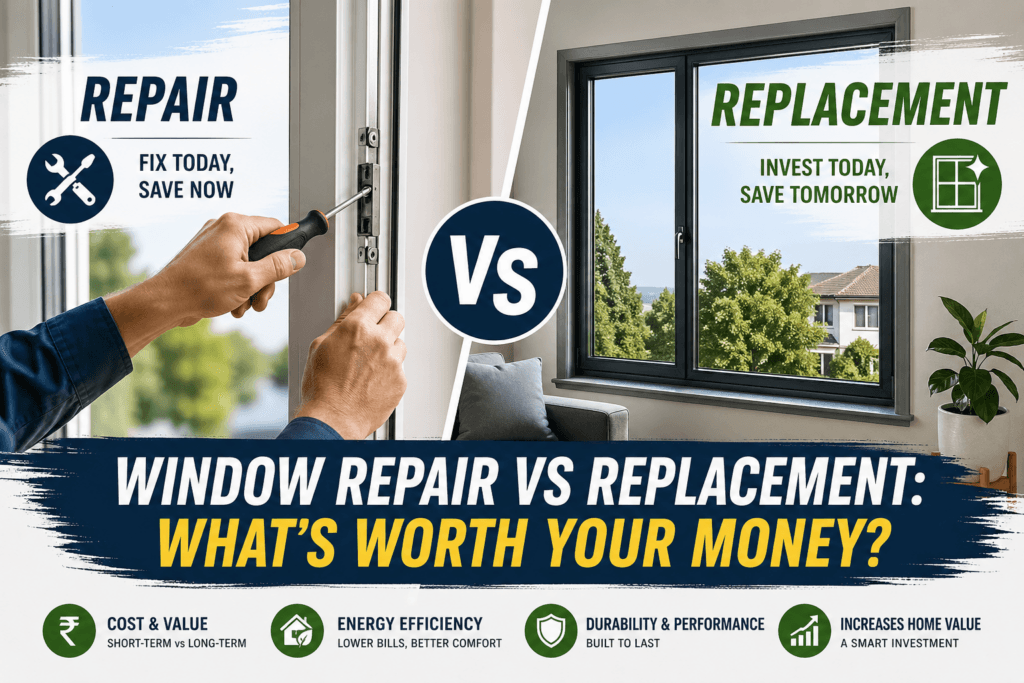
When your windows start showing signs of wear—whether it’s drafts, cracks, or difficulty opening them—the decision between repairing and replacing them can feel confusing. While repairs may seem like the cheaper and easier route, replacements often promise better long-term benefits. The real question is: which option actually gives you the best value for your money?
This guide breaks down both options in depth so you can make a confident, financially smart decision.
Understanding Window Repair
Window repair focuses on fixing specific problems without removing the entire window unit. This approach is typically chosen when the issue is isolated and the rest of the window is still in good condition.
For example, if your window has a small crack in the glass, a damaged seal, or a faulty locking mechanism, these can usually be repaired without replacing the entire structure. Similarly, minor air leaks or slightly worn frames can often be restored with sealing or patchwork.
The main advantage of repair lies in its affordability and speed. Since you are only addressing a specific issue, the cost is significantly lower compared to a full replacement. In many cases, repairs can be completed within a few hours, making it a convenient solution for homeowners who need a quick fix.
However, repairs are often temporary in nature. While they solve the immediate problem, they do not improve the overall performance of the window. If your windows are older or have multiple issues, you may find yourself repeatedly paying for repairs over time, which can add up.
Understanding Window Replacement
Window replacement involves removing the existing window and installing a completely new one. This can either include replacing the entire frame (full-frame replacement) or fitting a new window into the existing frame (insert replacement).
Unlike repairs, replacement addresses both visible and hidden issues. Older windows often suffer from poor insulation, outdated materials, and structural wear that cannot be fully fixed through repairs. By installing new windows, you essentially reset the lifespan of that part of your home.
One of the biggest advantages of replacement is improved energy efficiency. Modern windows are designed with advanced insulation technologies such as double or triple glazing, which help maintain indoor temperatures. This means your home stays cooler in summer and warmer in winter, reducing your reliance on heating and cooling systems.
Replacement also enhances the overall appearance of your home. New windows can modernize both the interior and exterior, making your property more attractive and potentially increasing its resale value.
The downside, of course, is the higher upfront cost and longer installation time. However, when viewed as a long-term investment, replacement often proves more economical.
Cost Comparison: Short-Term vs Long-Term Value
When comparing repair and replacement, the cost difference is one of the most important factors—but it shouldn’t be viewed only from a short-term perspective.
Repairs generally require a smaller initial investment, making them appealing if you’re working with a limited budget. However, because repairs do not address underlying aging or inefficiency, you may need to fix the same window multiple times.
On the other hand, replacement requires a larger upfront expense, but it significantly reduces ongoing maintenance costs. Additionally, energy-efficient windows can lower your monthly utility bills, helping you recover the investment over time.
In simple terms, repairs save money today, while replacements save money over the years.
Key Factors to Consider Before Deciding
Choosing between repair and replacement depends on several important factors, and understanding these can help you avoid unnecessary expenses.
The age of your windows plays a crucial role. If your windows are relatively new and have only minor issues, repair is usually sufficient. However, if they are more than 15–20 years old, replacement is often the smarter choice.
The extent of the damage is another major consideration. Small cracks, minor leaks, or hardware issues can be repaired easily. But if the frame is warped, rotting, or structurally compromised, repairs will not provide a lasting solution.
Energy efficiency is also a key factor. If you notice rising energy bills or inconsistent indoor temperatures, your windows may be the cause. In such cases, replacing them with modern, energy-efficient models can make a noticeable difference.
Finally, your long-term goals matter. If you plan to stay in your home for many years, investing in replacement can provide better comfort and savings. If you’re looking for a temporary fix before selling or renovating, repair may be enough.
Signs That Repair Is the Right Choice
In many situations, repair is the most practical option. If the damage is minimal and does not affect the overall structure of the window, fixing the issue can restore functionality without a major expense.
For instance, a small crack in the glass or a slightly loose seal can often be repaired quickly. Windows that still open and close smoothly and do not have significant drafts are usually good candidates for repair.
This approach works best when your windows are still relatively new and have been well maintained.
Signs That Replacement Is the Better Investment
There are also clear situations where replacement becomes the smarter financial decision. One of the most common signs is condensation between glass panes, which indicates a failed seal in double-glazed windows. This issue cannot be permanently fixed with simple repairs.
If your window frames are rotting, warped, or difficult to operate, replacement is usually necessary. These problems not only affect functionality but can also compromise safety and insulation.
Another strong indicator is consistently high energy bills. Inefficient windows allow heat to escape or enter your home, forcing your HVAC system to work harder. Replacing them can significantly improve energy performance.
The Role of Energy Efficiency
Energy efficiency is one of the biggest reasons homeowners choose replacement over repair. Older windows often lack proper insulation, allowing air to pass through easily. This results in temperature fluctuations and increased energy consumption.
Modern windows are designed to minimize heat transfer. They help maintain a stable indoor environment, reduce noise from outside, and improve overall comfort.
Over time, the savings on energy bills can offset the initial cost of installation, making replacement a financially sound decision.
Final Verdict: Which Option Is Worth It?
If your windows have minor issues and are still in good condition, repair is a practical and cost-effective solution. It allows you to fix problems quickly without a significant investment.
However, if your windows are old, inefficient, or frequently causing issues, replacement offers far greater value. While the upfront cost is higher, the long-term benefits—lower energy bills, improved comfort, and increased property value—make it a worthwhile investment.
In most cases, homeowners who choose replacement end up saving more money over time.
Frequently Asked Questions (FAQs)
1. How can I decide between repair and replacement?
The decision depends on the severity of the damage and the age of your windows. Minor issues can be repaired, but older or heavily damaged windows are better replaced.
2. Is replacing windows really a good investment?
Yes, especially if your current windows are inefficient. Replacement improves energy savings, comfort, and property value.
3. How long do windows typically last?
Most windows last between 15 and 30 years, depending on materials and maintenance.
4. Can foggy windows be repaired?
Foggy windows usually indicate a broken seal. While temporary fixes exist, replacement is the most effective solution.
5. Will new windows reduce my energy bills?
Yes, modern windows are designed to improve insulation, which can significantly lower heating and cooling costs.
6. Is it cheaper to repair than replace?
Repairs are cheaper upfront, but replacement can be more cost-effective in the long run.
7. Can I replace just one window instead of all?
Yes, you can replace individual windows based on need and budget.
8. Do new windows increase home value?
Yes, they improve both aesthetics and energy efficiency, making your home more attractive to buyers.
9. How long does replacement take?
It usually takes a few hours per window, depending on complexity.
10. Should I hire a professional?
For replacement, professional installation is strongly recommended to ensure proper sealing and performance.